
New to MMA, or bringing a friend up to speed before fight night? Here's everything a fight card tells you — using any event on mma-score as the example.
The card reads bottom-up
An MMA event is a stack of fights, and the order is meaningful:
- Early prelims and prelims open the night — often prospects and regional talent.
- The main card is the featured portion.
- The co-main event is the second-to-last fight.
- The main event closes the show: the biggest fight, at the top of the card, usually scheduled for 5 rounds instead of 3.
On mma-score the main event sits at the top of the event page; broadcast info for your country is linked from the event when available.
Records and weight classes
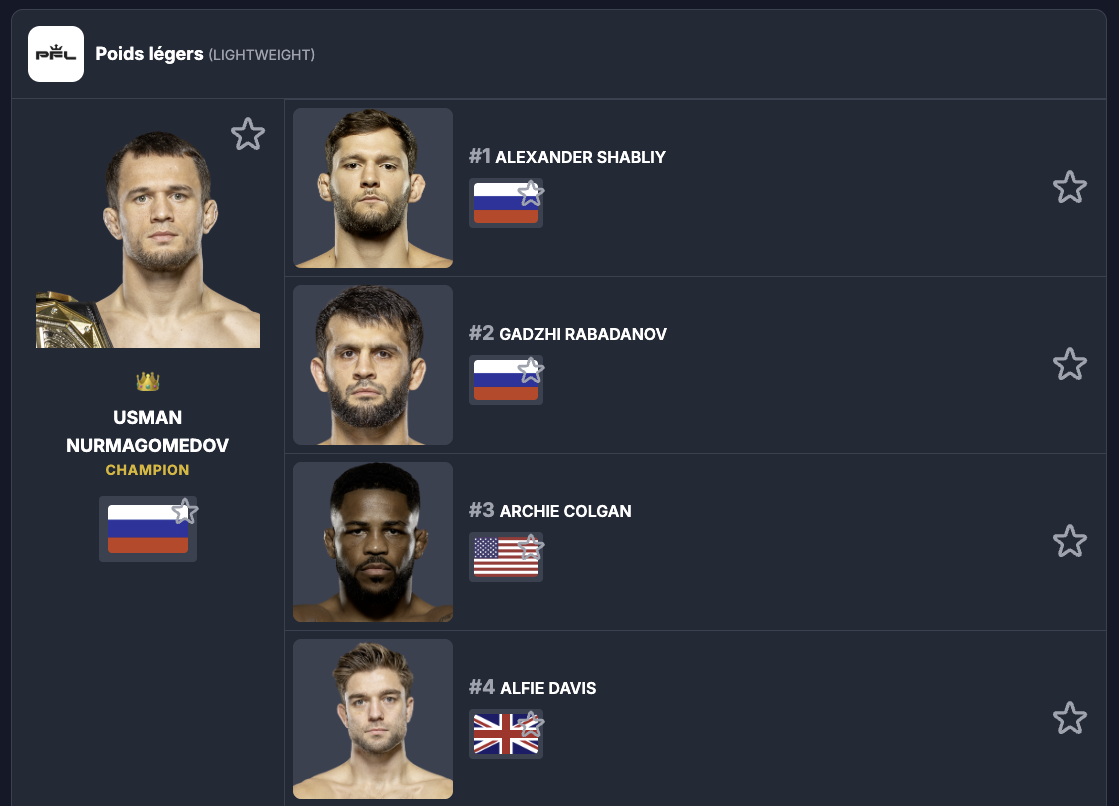
Next to each fighter you'll see a record like 24-3-1: wins, losses, draws. The weight class (flyweight up to heavyweight) is listed per fight — and in Rankings you can see where each fighter sits in their division, including the champion and, sometimes, an interim champion: a temporary titleholder crowned when the reigning champion is unavailable, usually setting up a unification fight.
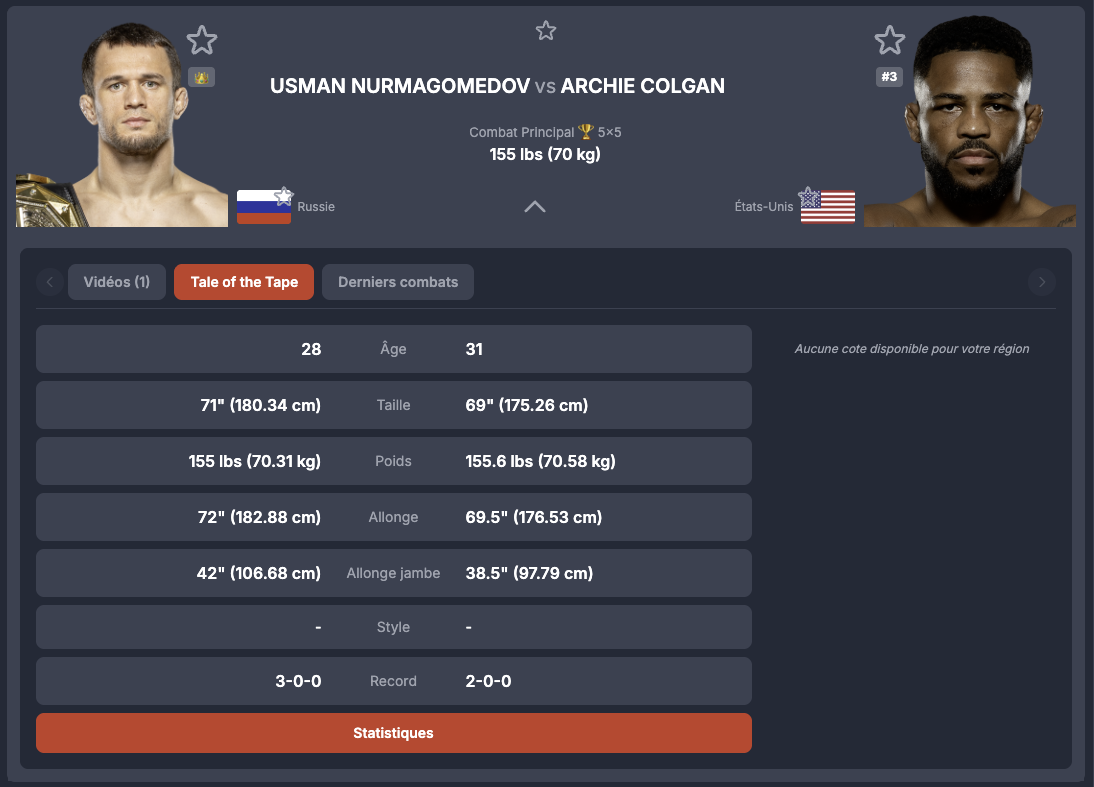
The Tale of the Tape
Before each fight, the Tale of the Tape lines up both fighters' vitals side by side:
- Age, and age on fight night
- Height and weight
- Reach — the arm span; a big reach advantage shapes the striking exchanges
- Leg reach, stance/style and record
- Their recent results, head to head
How fights end
Three families of outcomes: KO/TKO (strikes), submission (a tap), or the judges' decision after the final bell — unanimous, split or majority, scored round by round under the 10-point must system. When a fight goes to a decision, mma-score shows the judges' scorecards alongside the result.
Follow it live
A card is best read live: results, round-by-round tracking and stats and moving odds turn the list of fights into the story of the night.
Browse upcoming events